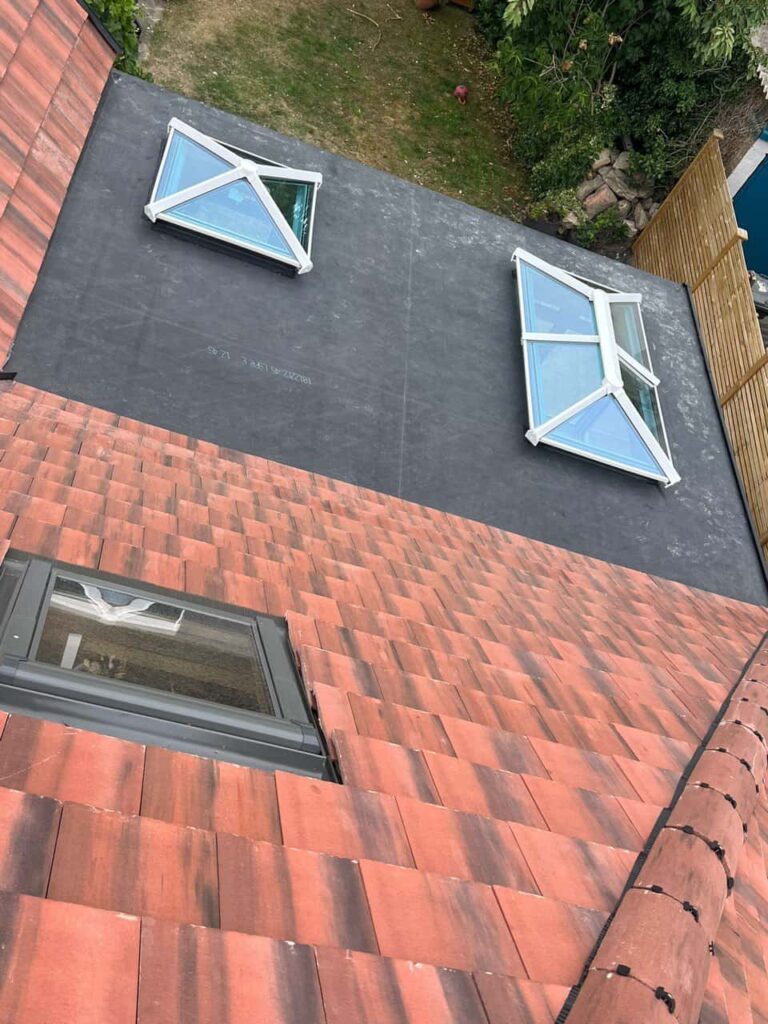
A single slipped roof tile can appear to be a relatively minor defect, particularly when the rest of the roof looks intact from ground level. However, tiles form part of an interconnected roof covering, and movement in one area can sometimes indicate that surrounding tiles, fixings or supporting materials also need attention.
For property owners in Burnham, Buckinghamshire, arranging an assessment when a slipped tile is first noticed can help identify why it has moved and whether the problem is genuinely isolated. Repairing the affected area promptly can restore the roof covering before continued weather exposure or movement contributes to additional deterioration.
The important point is not simply to reposition the visible tile. An effective roof repair should consider the condition of neighbouring tiles, fixings, battens and relevant roof details so that the cause of the movement is understood.
How Can One Slipped Roof Tile Lead to Further Roofing Problems?
Roof tiles are designed to overlap and work together to provide a continuous weather-resistant covering. When one tile slips out of position, the arrangement can be disrupted and previously protected areas may become more exposed.
Whether additional tiles are likely to move depends on why the original tile slipped. An isolated damaged fixing may affect only one tile, while deterioration involving battens, fixings or a wider section of roof can result in repeated movement.
Professional inspection helps distinguish between these situations before the problem develops further.
Roof Tiles Depend on Correct Positioning
Individual roof tiles do not work independently.
Their arrangement relies on appropriate positioning and overlap so that rainfall is directed down the roof towards the drainage system.
When a tile moves significantly from its intended position, a gap can develop within the covering.
This can expose parts of the roof that would normally remain protected and may alter how water behaves around neighbouring tiles.
A Slipped Tile Can Expose the Roof Beneath
Once a tile has moved, the materials beneath may become more exposed to rainfall.
Depending on the roof construction, this can include underlay and battens.
These components have important functions, but the outer tile covering should remain correctly positioned.
Leaving an opening within the roof unnecessarily increases the exposure of materials that are normally protected by the tiles above.
Underlay Is Not a Permanent Replacement for a Missing Tile
Modern and older tiled roofs may contain an underlay beneath the main covering.
This provides an additional layer within the roofing system, but it should not be expected to compensate indefinitely for a displaced tile.
Underlay can deteriorate with age, and its condition may vary considerably across an older roof.
A slipped tile should therefore be repaired rather than assuming the material underneath will continue managing rainfall without difficulty.
Wind Can Affect a Tile That Is Already Loose
A tile that has started moving may become more vulnerable to further displacement.
Wind can act around exposed edges and gaps differently from a roof where every tile remains correctly seated.
The outcome depends on the tile type, fixing method and condition of the surrounding roof.
Early repair can restore the affected section before additional weather exposure has an opportunity to worsen the movement.
Surrounding Tiles Should Be Checked
Repairing one slipped tile should include looking at the immediate area around it.
Neighbouring tiles may remain perfectly sound, but they can also show signs of movement, cracking or deteriorated fixings.
Checking the surrounding section helps establish whether the visible tile is the only problem.
This is particularly important where more than one tile has previously moved from the same part of the roof.
The Reason the Tile Slipped Matters
A slipped tile is a symptom.
The important question is why it moved.
Possible contributing factors can include deterioration of a fixing, problems with the supporting batten, damage to the tile itself or movement affecting nearby components.
Without identifying the cause, simply pushing the tile back into position may not provide an appropriate repair.
Fixings Can Deteriorate Over Time
Roof tiles may be secured using different methods depending on the roof construction and tile type.
Over time, individual fixings can deteriorate or become less effective.
Where one fixing has failed, the issue may remain completely localised.
However, if similar materials of the same age are showing deterioration across a wider section, neighbouring tiles may also require closer inspection.
This is why the surrounding condition is relevant even when only one slipped tile is visible.
Battens Form an Important Part of a Tiled Roof
Roof battens provide support for the tiles.
If the batten associated with a slipped tile has deteriorated or become damaged, repositioning the tile without addressing the support beneath it will not solve the underlying problem.
The relevant area may need to be inspected to determine whether the batten remains suitable.
This cause-based approach can help prevent the same tile, or nearby tiles, from moving again.
A Broken Tile Can Sometimes Appear to Have Simply Slipped
Not every displaced tile has moved intact.
A tile may crack or break around its fixing point and then move down the roof.
From ground level, the defect can look like straightforward slippage.
Closer assessment may reveal that the tile itself requires replacement.
Understanding the actual condition is important before deciding what repair is needed.
Repeated Tile Movement Should Not Be Treated as Coincidence
One slipped tile can be an isolated defect.
Several tiles moving over a relatively short period deserve a wider assessment.
Repeated movement may suggest that a common factor is affecting the section rather than each tile developing an unrelated problem.
Looking beyond the most recently slipped tile can identify whether the supporting materials or fixings need attention.
Small Gaps Can Allow Wind-Driven Rain to Enter
Rain does not always fall vertically onto a roof.
During windy conditions, water can be driven towards openings and junctions from different directions.
A gap created by a slipped tile can therefore expose areas that would normally remain covered.
The amount of water entering depends on the position and size of the opening, but restoring the roof covering promptly reduces unnecessary exposure.
Water Entry May Not Be Immediately Visible Indoors
A slipped tile does not always produce an obvious ceiling stain straight away.
Water can enter the roof construction and travel before reaching a visible internal surface.
Some moisture may also remain within less visible areas.
The absence of an obvious internal leak should therefore not be treated as confirmation that a displaced tile can safely be ignored.
Water Can Travel Away From the Original Defect
Roof leaks can be deceptive.
Water entering through a gap in the tiles may follow underlay, timber or other components before becoming visible elsewhere.
This means the location of an internal damp patch may not correspond directly with the slipped tile.
Professional roof inspection can relate internal symptoms to the external covering and determine whether there are additional defects.
Prompt Repair Can Help Limit Moisture Exposure
The longer an opening remains within the roof covering, the more opportunities there are for rainfall to reach underlying materials.
This does not mean that every slipped tile immediately causes extensive damage.
It means that leaving the defect unresolved creates unnecessary exposure.
Timely repair restores the protective arrangement of the roof and allows any affected surrounding materials to be assessed.
A Slipped Tile Can Affect the Appearance of Nearby Tiles
When one tile moves, the resulting gap can make the surrounding section appear uneven.
Sometimes this reveals that neighbouring tiles have also shifted slightly.
A professional inspection can determine whether the movement is limited to one component or extends across a broader area.
Identifying subtle changes early may prevent repeated individual repair visits as additional tiles become visibly displaced.
Tiles Near Roof Edges Need Particular Attention
Tiles around exposed roof edges can experience different weather conditions from those positioned within the main field of the roof.
If movement develops near an edge, the relevant surrounding details should be checked.
The objective is to establish whether the tile has failed independently or whether another component has contributed to the problem.
A complete assessment is more useful than treating every slipped tile identically.
Ridge and Hip Areas Can Also Experience Movement
Tiles and associated components around ridges and hips form important parts of a pitched roof.
If a slipped tile is close to one of these areas, the nearby junction should be examined as part of the repair.
Movement may still be entirely localised, but checking adjoining details provides a clearer understanding of the roof condition.
This helps ensure that another nearby weakness is not overlooked.
Valleys Should Remain Clear and Intact
Where roof slopes meet at a valley, rainfall from surrounding areas is channelled along a relatively concentrated route.
A displaced tile near a valley can therefore deserve particular attention.
The tile, surrounding coverings and valley should be assessed to confirm that water can continue moving through the area correctly.
Treating only the visible tile without checking the nearby junction can leave another problem unidentified.
Flashing and Other Junctions May Need Inspection
Where tiles meet chimneys or other roof details, flashing helps maintain weather resistance at the junction.
A slipped tile close to these areas may be unrelated to the flashing.
However, inspecting the complete junction can help distinguish between tile movement and another source of water entry.
This is especially important where the original reason for investigation is an internal leak rather than a visibly displaced tile.
One Slipped Tile Does Not Mean the Whole Roof Is Failing
It is equally important not to overstate the significance of an isolated defect.
A single slipped tile on an otherwise sound roof can often remain a localised repair issue.
The purpose of professional inspection is not to assume that extensive work is required.
It is to confirm why the tile moved, assess the surrounding area and complete a proportionate repair.
Older Roofs Can Still Be Suitable for Local Repairs
An older tiled roof does not automatically need extensive work because one tile has slipped.
If the surrounding coverings, battens and relevant details remain serviceable, a targeted repair may be appropriate.
Age is only one factor.
The actual condition and pattern of deterioration provide much more useful information when deciding what work is necessary.
Several Slipped Tiles Can Indicate a Wider Maintenance Issue
The situation changes when multiple tiles begin moving across the same roof.
If new slipped tiles appear repeatedly, it becomes increasingly important to understand whether there is a common underlying cause.
Repeatedly replacing or repositioning individual tiles without examining the broader section may treat symptoms rather than the source.
A wider inspection can determine whether local repairs remain suitable.
Previous Repair Areas Can Provide Useful Clues
Where tiles have already been repaired in the same section, their history can help with diagnosis.
A new defect may be unrelated to the previous repair, but repeated movement around the same area deserves closer attention.
The condition of previous work, surrounding tiles and supporting materials can all help explain what is happening.
This information supports a more effective repair strategy.
A Tile Should Not Simply Be Forced Back Into Place
From ground level, a slipped tile can look as though it only needs to be pushed upwards.
However, if the fixing has failed or the supporting material is damaged, repositioning it alone may not secure it properly.
The tile itself may also be cracked.
An appropriate repair should establish what is needed to restore the affected section rather than concentrating solely on appearance.
Small Defects Are Often Easier to Manage While Localised
One of the main reasons for dealing with slipped tiles promptly is that the repair may remain relatively focused while the problem is confined to a small area.
If surrounding materials continue to experience weather exposure or additional tiles begin moving, the scope of work can increase.
Early attention allows the condition to be understood before deterioration becomes more widespread.
Prompt Repairs Can Reduce the Risk of Repeated Problems
A correctly diagnosed repair can address the reason for the tile movement rather than simply correcting its position.
This can reduce the likelihood of the same defect immediately recurring.
Where surrounding components also need attention, identifying them during the initial repair can help prevent a pattern of neighbouring tiles becoming loose one after another.
Internal Damp Should Prompt Further Investigation
If a slipped tile is accompanied by damp marks inside the property, the situation should be investigated rather than assuming the visible tile is definitely responsible.
The displaced tile may be the entry point, but water can also originate from another nearby defect.
A professional inspection can examine both possibilities.
Finding the true source is essential before the internal symptom can be expected to stop.
Multiple Damp Areas May Indicate More Than One Defect
A roof can sometimes contain several unrelated weaknesses.
If damp appears in more than one location, one slipped tile may not explain everything.
The wider roof condition may need to be considered.
This prevents a single obvious defect from distracting attention from other areas that also require repair.
Roof Repairs Should Address Causes Rather Than Symptoms
A high-quality roof repair begins with diagnosis.
For a slipped tile, this means considering:
- The condition of the tile
- How far it has moved
- The fixing method
- Relevant batten condition
- Nearby tiles
- Previous repairs
- Surrounding roof details
- Any internal signs of water entry
- Whether other tiles have recently slipped
These factors help determine whether the problem is isolated or part of a wider pattern.
Visual Inspection From the Ground Has Limitations
Homeowners can often spot an obvious slipped tile from outside.
However, it may be difficult to see the condition of the fixing, batten or surrounding components from ground level.
Other tiles may also have moved slightly without creating an obvious gap.
Professional assessment provides a closer understanding of the affected section before repair decisions are made.
Regular Observation Can Help Identify Changes Earlier
Homeowners do not need to inspect roofing components closely themselves to notice changes.
A visibly uneven tile, new gap or obvious displacement can indicate that professional assessment is worthwhile.
Comparing the general appearance of the roof after significant weather can sometimes reveal changes that were not previously present.
The objective is early recognition rather than attempting to diagnose the defect from the ground.
Repairs Should Remain Proportionate to the Condition
Timely repair does not mean replacing unnecessary sections of a roof.
If only one tile and fixing require attention, the repair can remain focused.
If inspection reveals that several nearby components have deteriorated, the work can be adjusted accordingly.
A proportionate approach ensures the repair reflects what the roof actually needs.
Timely Tile Repairs Can Protect the Wider Roof Covering
The main benefit of repairing a slipped tile early is restoring continuity to the roof.
Correct tile positioning helps maintain the intended overlap and weather protection.
By addressing the original movement before surrounding components become unnecessarily exposed, the repair can help preserve the wider roof covering.
This is a straightforward example of why small roofing defects are worth investigating before they develop further.
When Does a Slipped Tile Problem Require Wider Attention?
A broader assessment becomes particularly useful when:
- Several tiles have slipped
- Tiles repeatedly move from the same area
- Previous repairs have not resolved the problem
- Supporting battens appear affected
- Cracking is present across multiple tiles
- Internal damp continues after an earlier repair
- Several roof details show deterioration
- Movement is developing across a larger section
These signs do not automatically mean extensive roofing work is required, but they justify looking beyond a single tile.
Professional Diagnosis Can Prevent Repeated Patch Repairs
Repeatedly repairing individual tiles as they slip can become ineffective if the real problem affects a wider section.
Professional diagnosis can identify whether the pattern is connected.
If it is, addressing the relevant underlying cause can provide a more coherent solution than waiting for each tile to become visibly displaced.
If it is not, local repairs can continue to be used where appropriate.
Professional Slipped Tile Repairs in Burnham, Buckinghamshire
At LS Roofing Burnham, we assess slipped roof tiles in the context of the surrounding roof rather than simply repositioning the visible tile.
The condition of the tile, fixings, supporting materials and nearby coverings can all help explain why movement has occurred.
For property owners in Burnham, Buckinghamshire, this approach allows localised problems to be repaired appropriately while identifying whether any neighbouring components also require attention.
Conclusion
Slipped roof tiles should be repaired before more tiles become loose because one displaced tile can expose underlying materials and may sometimes indicate deterioration affecting the surrounding section. Continued wind and rainfall can also increase the consequences of leaving an existing gap unresolved.
However, one slipped tile does not automatically mean that the complete roof has a serious problem. Many defects remain localised and can be addressed with a targeted repair when the surrounding roof is in suitable condition.
The important step is establishing why the tile moved. Checking the tile itself, its fixing, supporting batten and neighbouring roof coverings helps determine whether the problem is isolated or part of a developing pattern.
If you have noticed a slipped or loose roof tile at your property in Burnham, Buckinghamshire, contact LS Roofing Burnham. We can assess the affected section, identify the likely cause and recommend an appropriate repair based on the actual condition of your roof.
Call us on: 01628 965 691
Click here to find out more about LS Roofing Burnham
Click here to complete our contact form and see how we can help with your roofing needs.